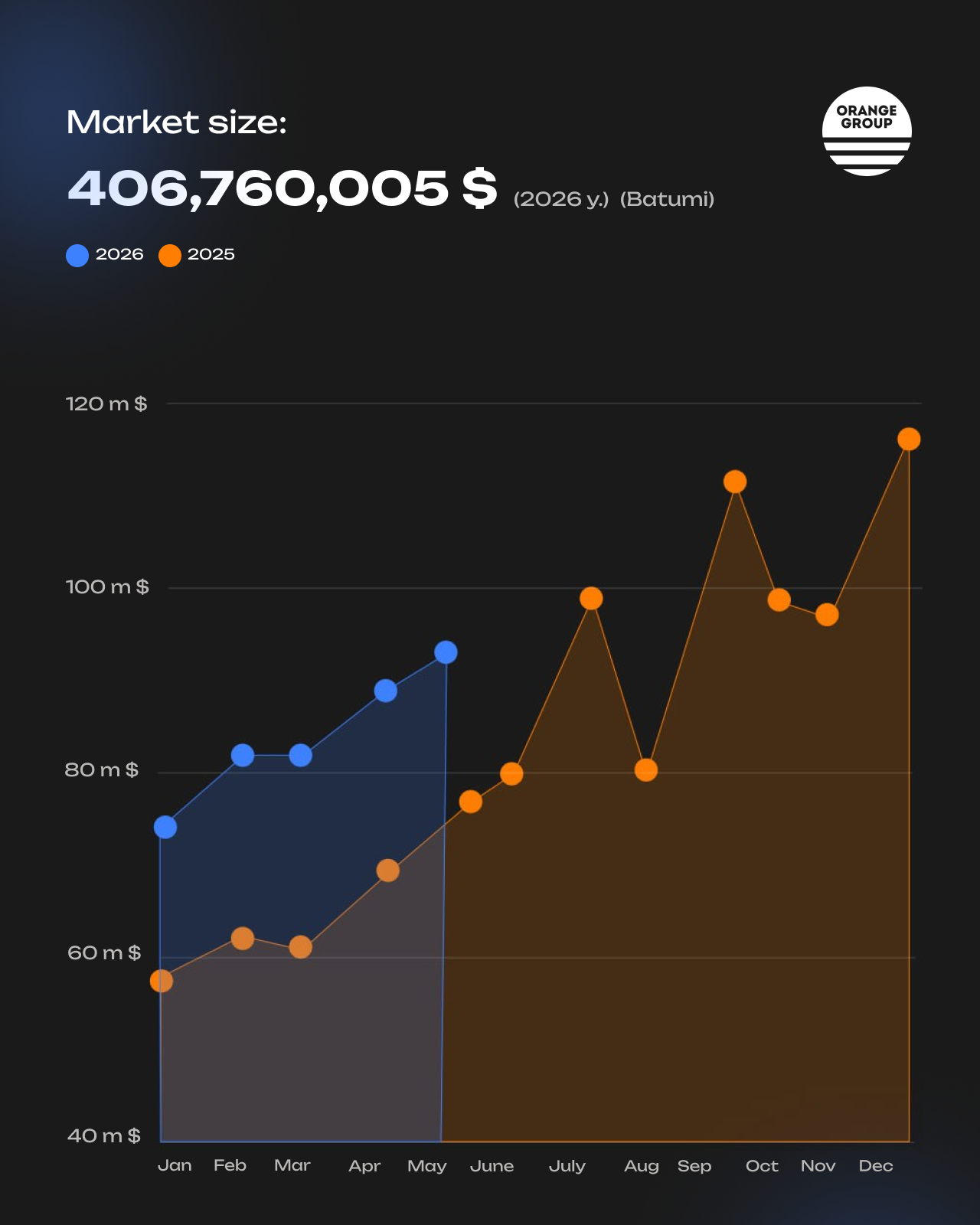
According to the latest statistics, 1,324 residential apartment transactions were registered in Batumi in May. This is 2.5% more than a year earlier. However, the market volume grew by 22.2% at once — reaching $87 million.
The market is growing not so much due to a sharp increase in the number of transactions, but rather due to rising property values and a shift in demand toward more expensive segments.
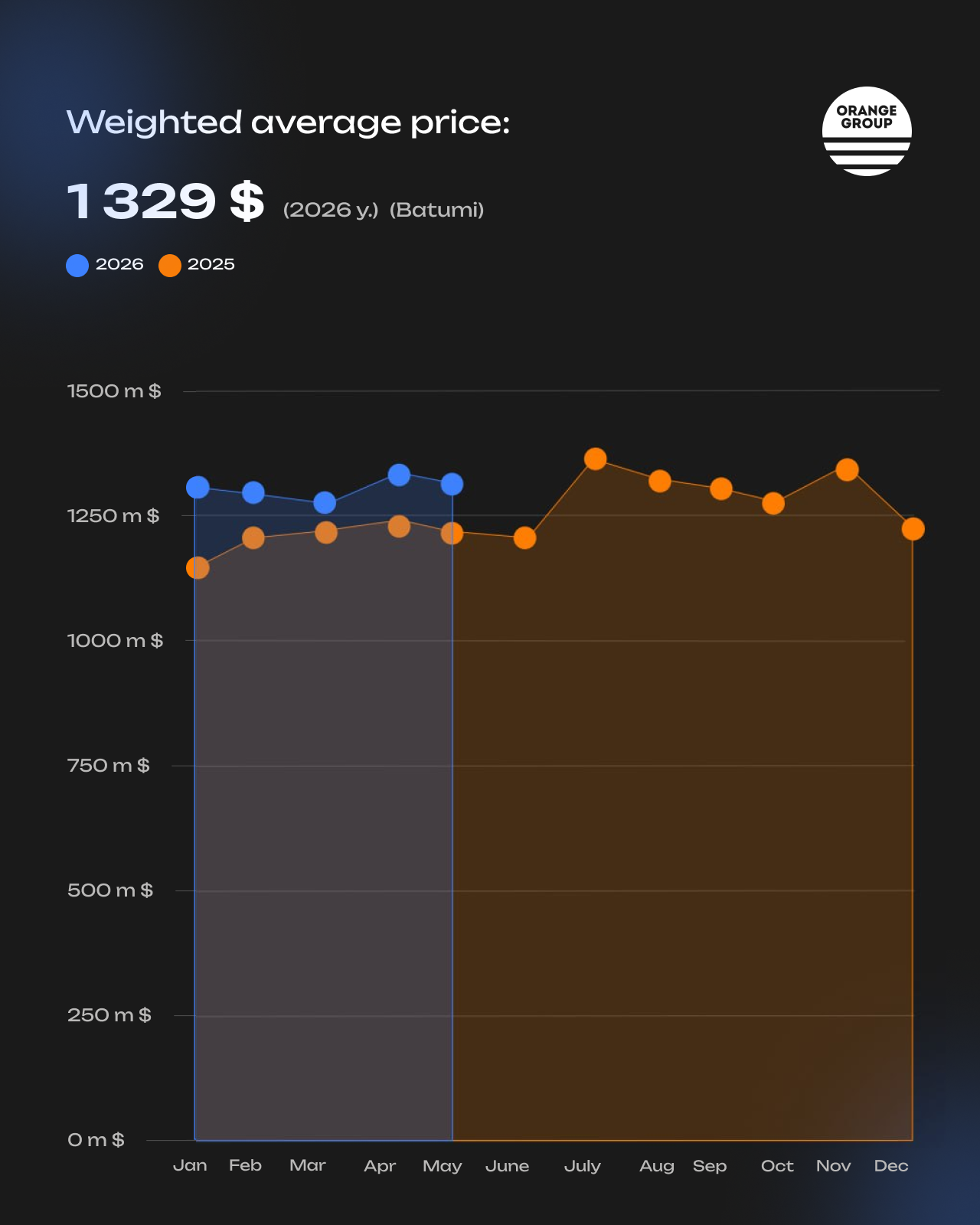
New developments continue to hold their position: the number of transactions in new projects increased by 3.3%, while the weighted average price reached $1,323 per m² — 8.7% higher than in May of last year.
At the same time, there is an important nuance within the market. In the primary market, the number of transactions decreased by 8.5%, but some primary transactions are registered with a delay, so these figures do not always immediately reflect the real sales activity of developers.
Meanwhile, the secondary market showed growth of 13.4%. This may indicate that buyers are increasingly looking at completed or more predictable properties, where they can move faster into rental income, resale, or personal use.
Batumi’s main driver remains unchanged — foreign demand. The share of foreign buyers increased to 49%, and 59% of the total growth in transactions across new and older projects was driven specifically by foreigners.
In other words, Batumi still operates as an international market: property in the city is purchased not only for living, but also as an investment tool — for rental income, resale, capital preservation, and seasonal seaside living.
🟠 What does this mean for the buyer?
In such a market, it is important not just to search for “an apartment in Batumi.” You need to understand which property will be liquid: who will rent it later, who will buy it on resale, how strong the location is, how the district is developing, and whether the project has real demand.
Prices are rising, but not all properties are growing equally. That is why the main task is not to choose the loudest project, but the one with a clear strategy.
Message us — we will help you find real estate in Batumi based on your goal: living, rental income, or capital growth.
The market is growing not so much due to a sharp increase in the number of transactions, but rather due to rising property values and a shift in demand toward more expensive segments.
New developments continue to hold their position: the number of transactions in new projects increased by 3.3%, while the weighted average price reached $1,323 per m² — 8.7% higher than in May of last year.
At the same time, there is an important nuance within the market. In the primary market, the number of transactions decreased by 8.5%, but some primary transactions are registered with a delay, so these figures do not always immediately reflect the real sales activity of developers.
Meanwhile, the secondary market showed growth of 13.4%. This may indicate that buyers are increasingly looking at completed or more predictable properties, where they can move faster into rental income, resale, or personal use.
Batumi’s main driver remains unchanged — foreign demand. The share of foreign buyers increased to 49%, and 59% of the total growth in transactions across new and older projects was driven specifically by foreigners.
In other words, Batumi still operates as an international market: property in the city is purchased not only for living, but also as an investment tool — for rental income, resale, capital preservation, and seasonal seaside living.
🟠 What does this mean for the buyer?
In such a market, it is important not just to search for “an apartment in Batumi.” You need to understand which property will be liquid: who will rent it later, who will buy it on resale, how strong the location is, how the district is developing, and whether the project has real demand.
Prices are rising, but not all properties are growing equally. That is why the main task is not to choose the loudest project, but the one with a clear strategy.
Message us — we will help you find real estate in Batumi based on your goal: living, rental income, or capital growth.
Join our Telegram channel